About
Technology is the medium. People are the point.
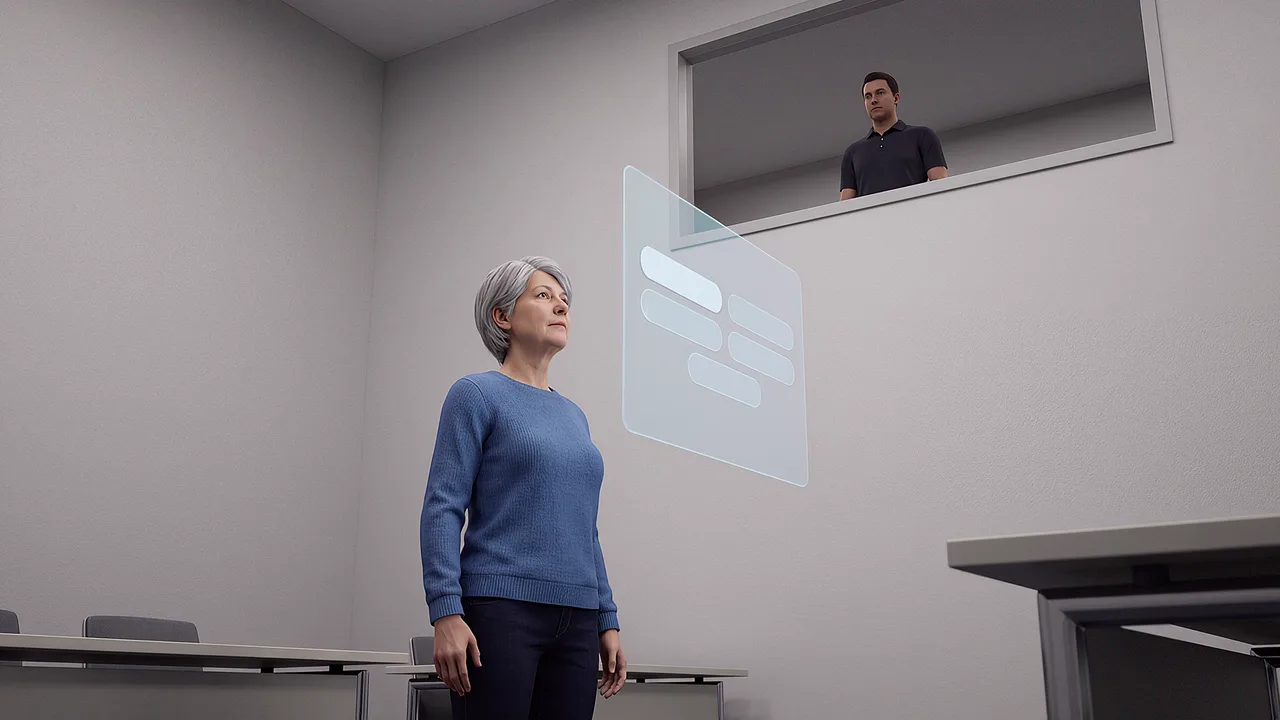
A nurse practises speaking up to a senior colleague before the shift where it counts. People Tech Revolution builds that rehearsal room in virtual reality and AI, co-designed with your own practitioners and backed by published research.
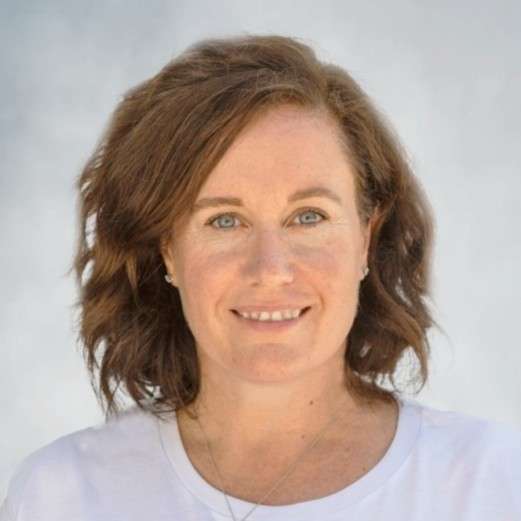
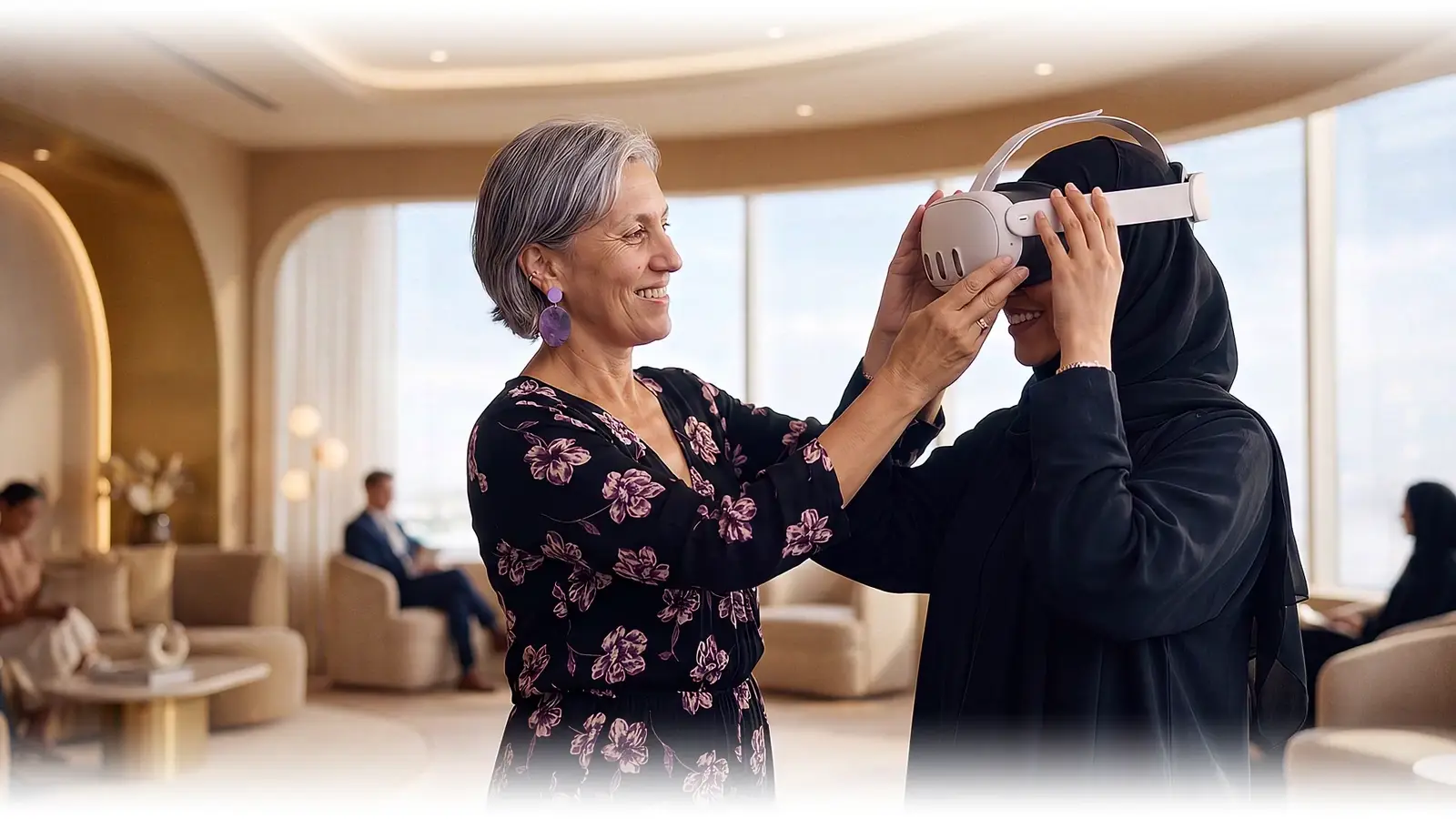
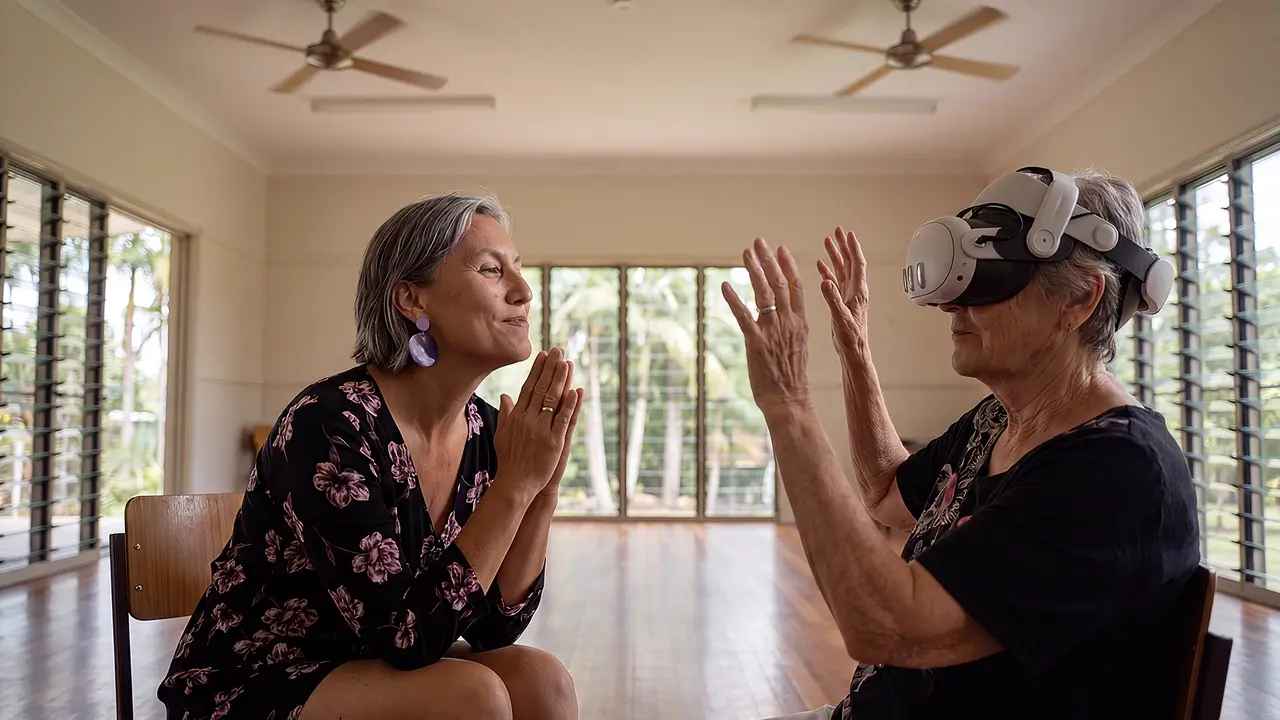
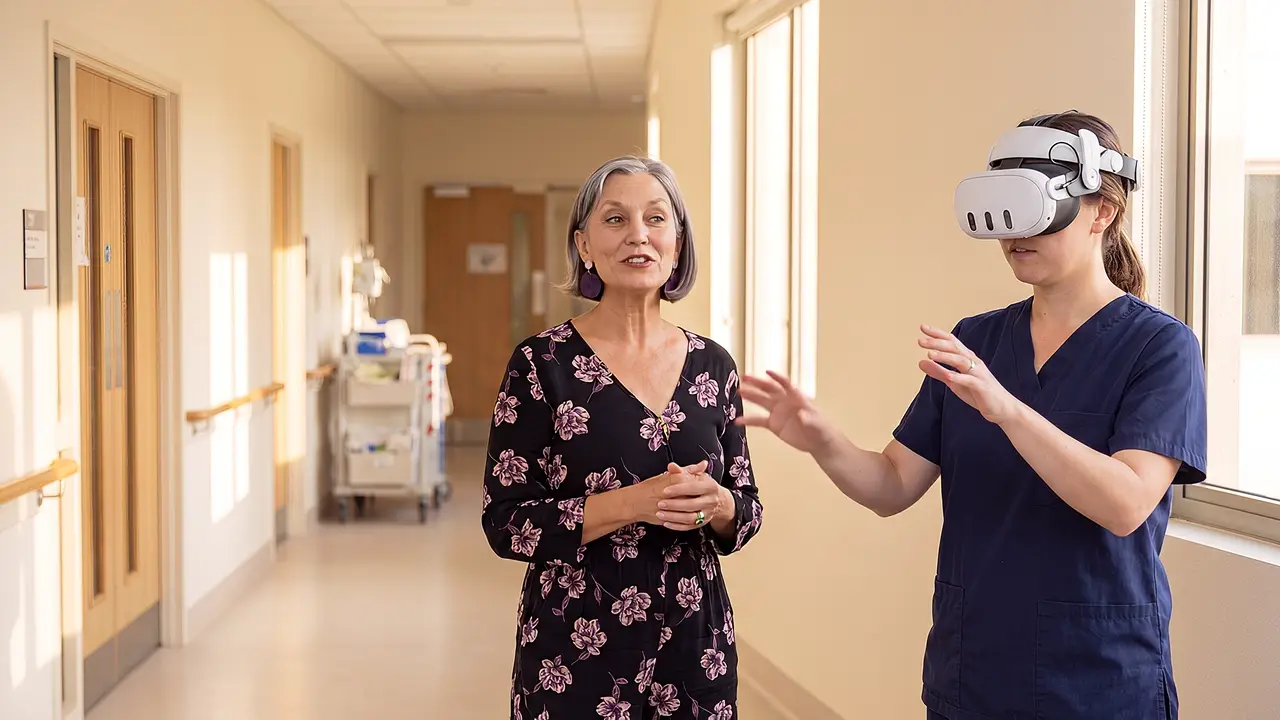
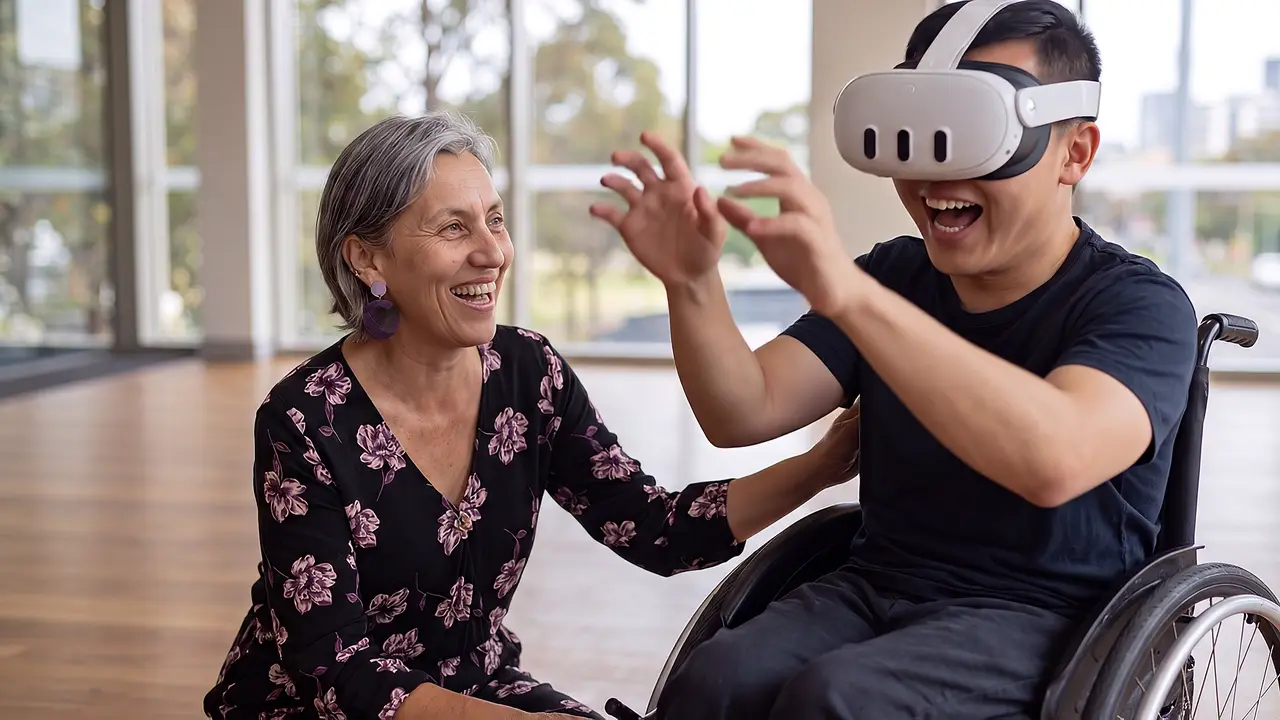
Leonie Sanderson, PTR co-founder, fitting a headset for a participant.
Practise the moment before it is real
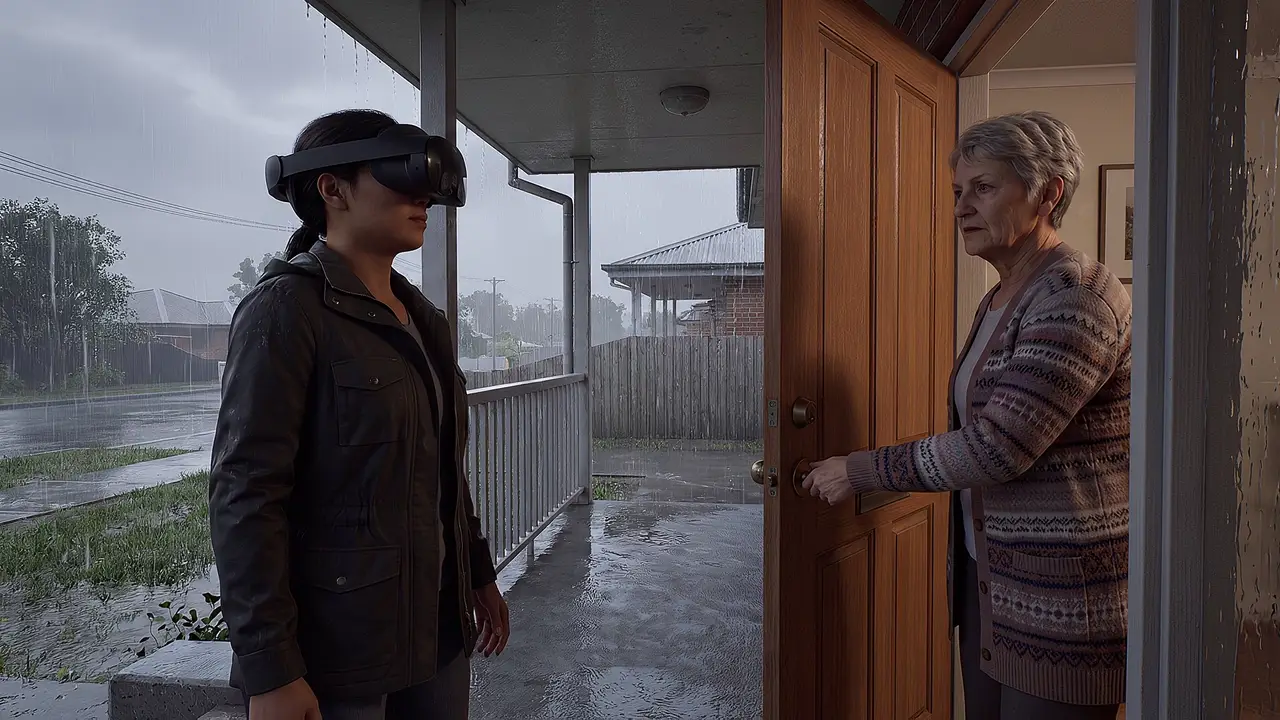
A worker waits on a rain-soaked verandah with one sentence to get right, and she has never said it to anyone before. That is the moment PTR builds for.
Your people rehearse it in VR or with an AI partner, as often as they need, with nothing real at stake. You get the scene in their own words, the debrief built in, and published evidence to hand to a board.
If this is the way you want to build, the next conversation starts here.
Where to go from here
Who we are, how we work, and the news from the rooms we work in.
And the page your reviewers will ask for
Who PTR is, where information is processed, what a participant consents to, how a session leaves a record an assessor can inspect, and the versioned documents behind each answer, gathered for procurement, clinical governance, security and legal.
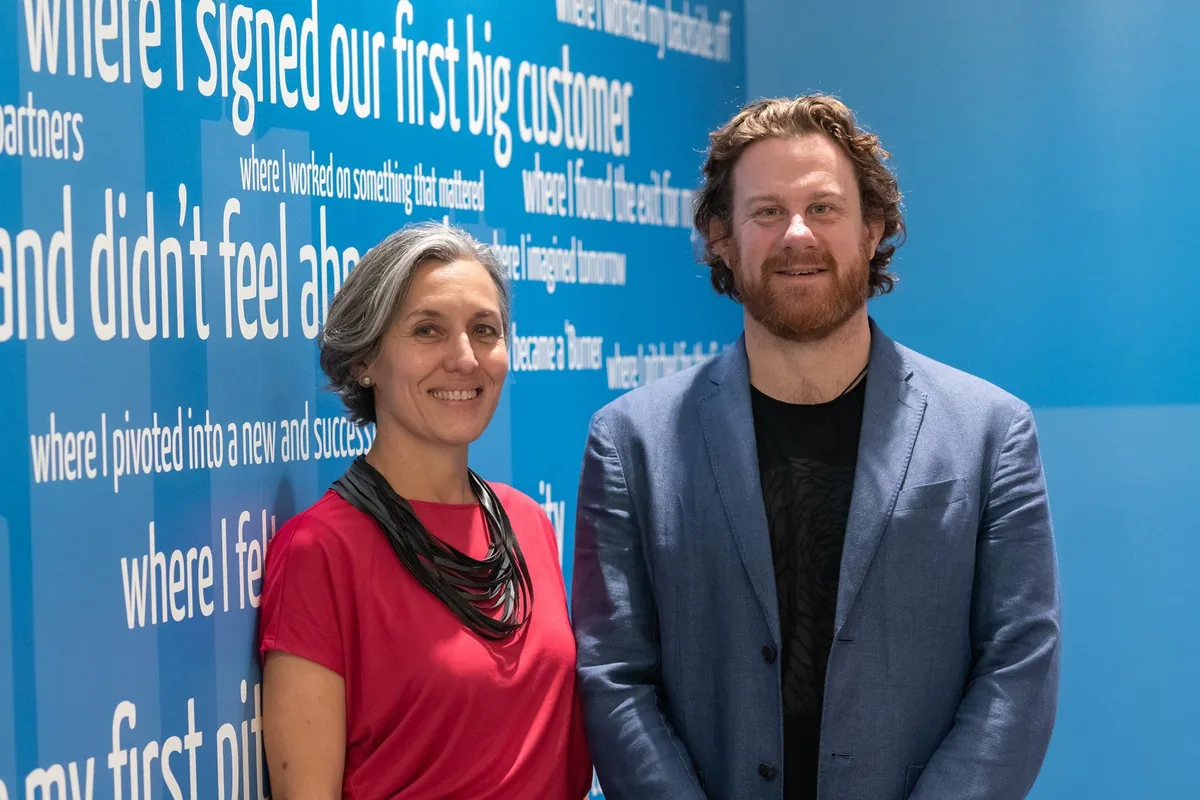
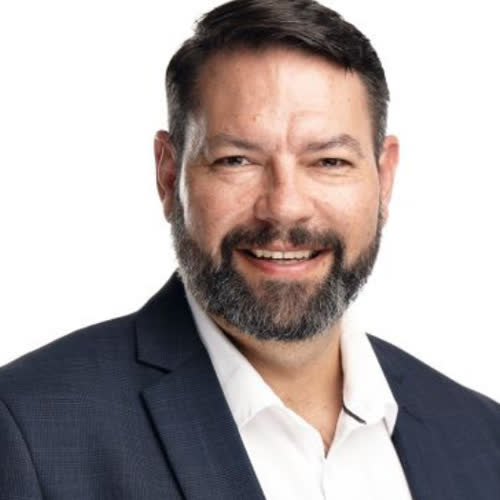
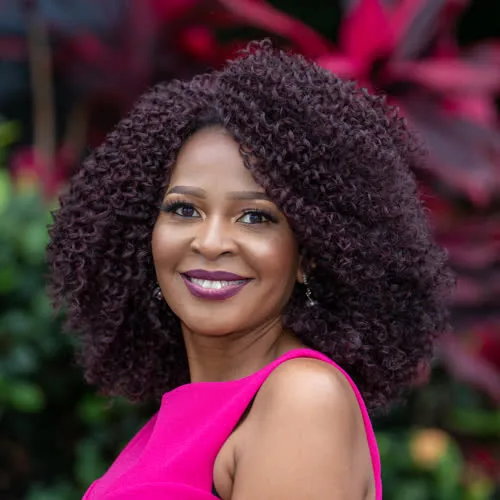
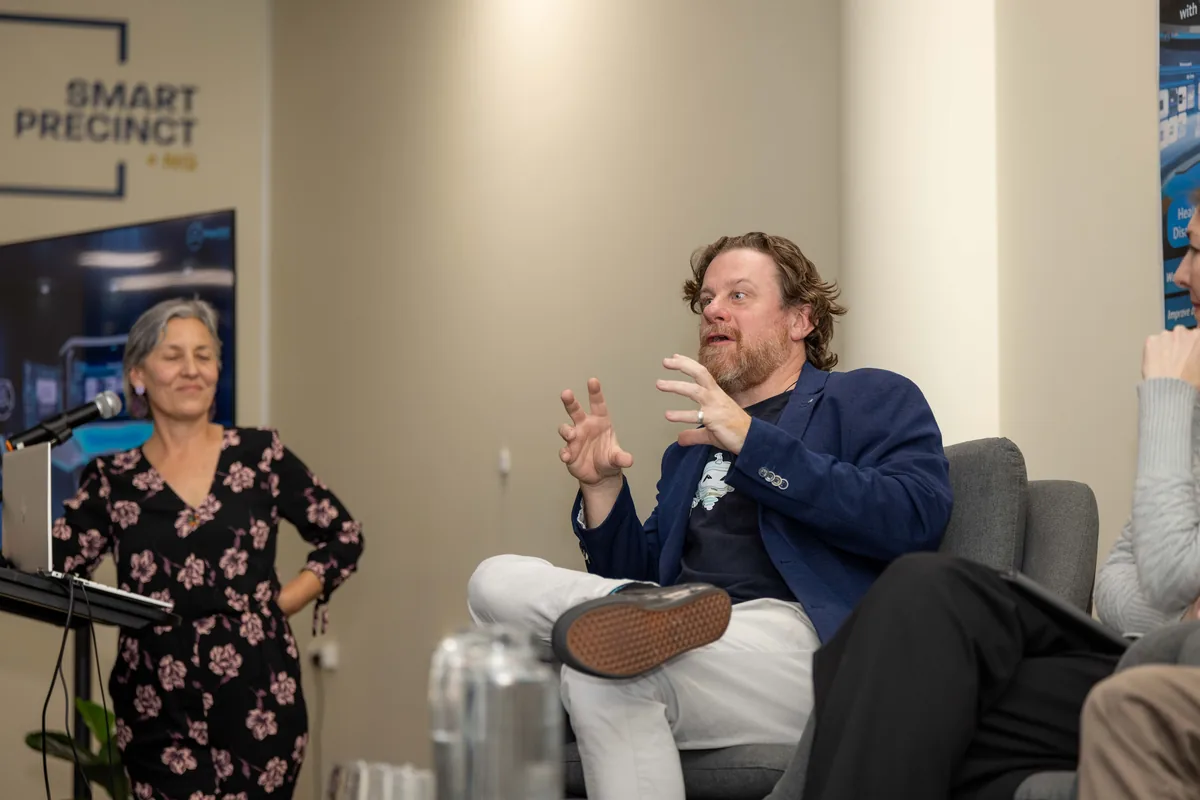
Leonie Sanderson and Simon Lowe
They set off on a road trip, interviewing older people about ageing in Australia, and founded The Ageing Revolution.
Carked It! is the card game they co-designed with the Good Death Impact Network.
People Tech Revolution came next, and it builds in virtual reality and AI.
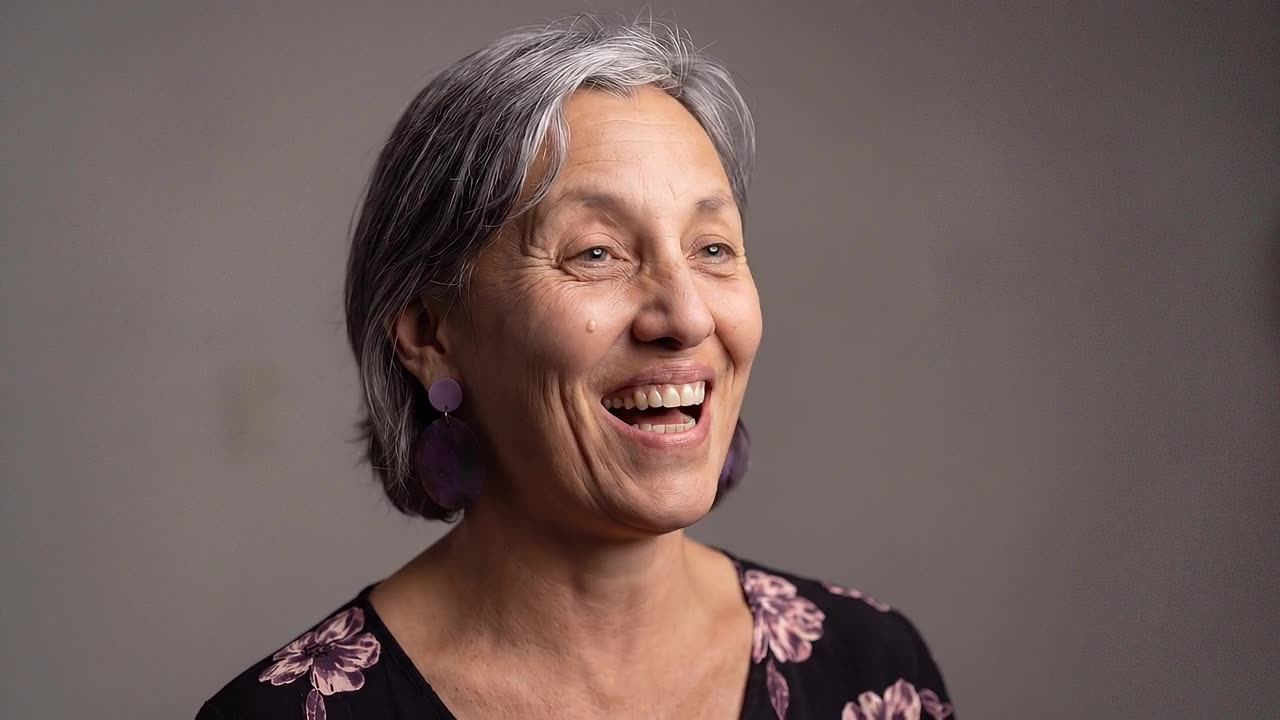
Leonie Sanderson holds formal qualifications in psychology and communications. Across 30 years, she has worked in Queensland Government policy, health consumer engagement, social change, co-design and published VR research. She designs and leads the workshops.
Simon Lowe came out of strategic partnerships, international business development and product, working with major brands and the NSW State Government. He leads the studio and the builds.
"Our ethos from the beginning has been about co-designing solutions alongside people with lived experiences."
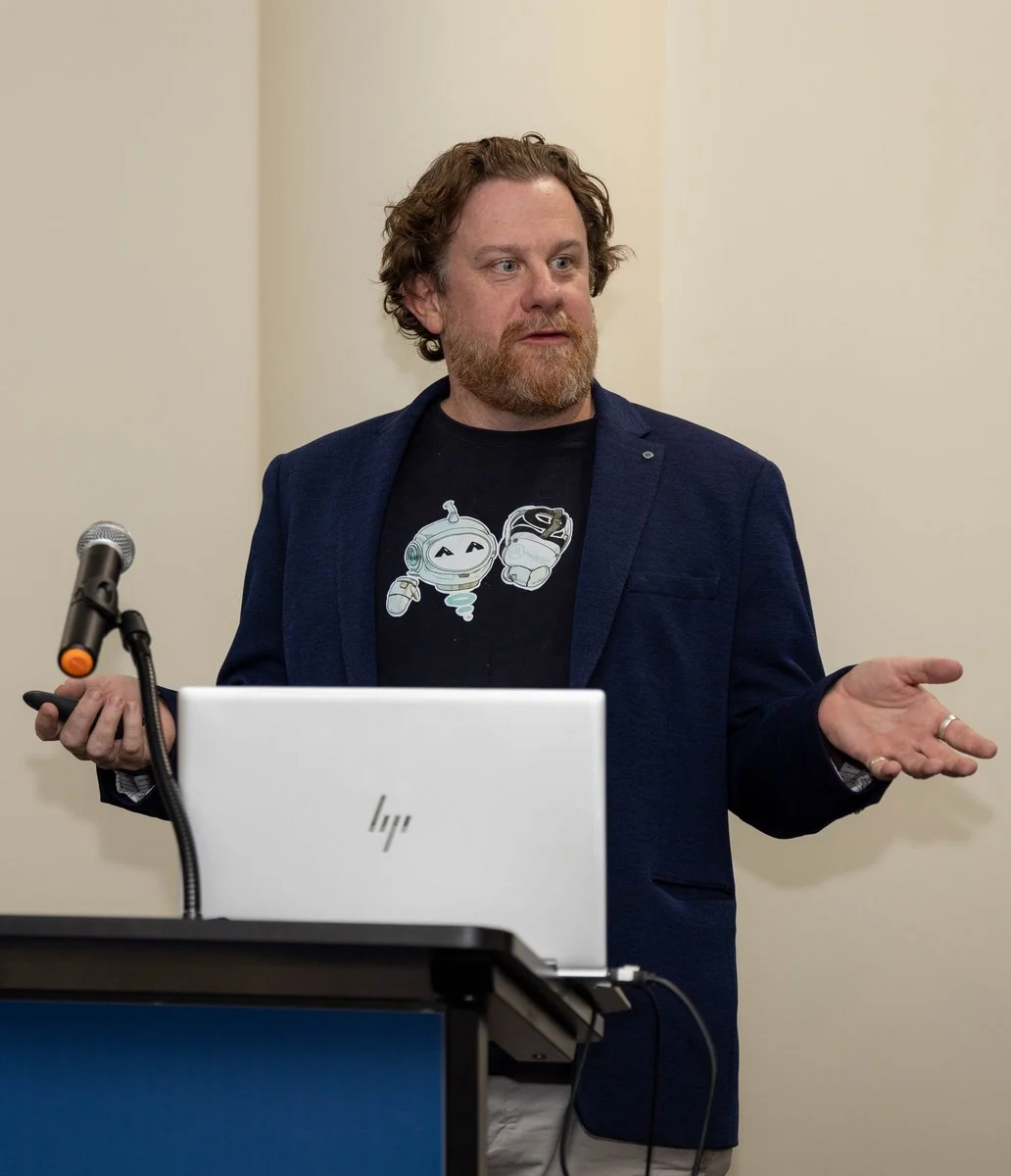 Simon Lowe
CEO, People Tech Revolution. SAE University College, 2018
The principles every build is held to
They are the reason a client is sometimes told not to buy VR or AI from us at all.
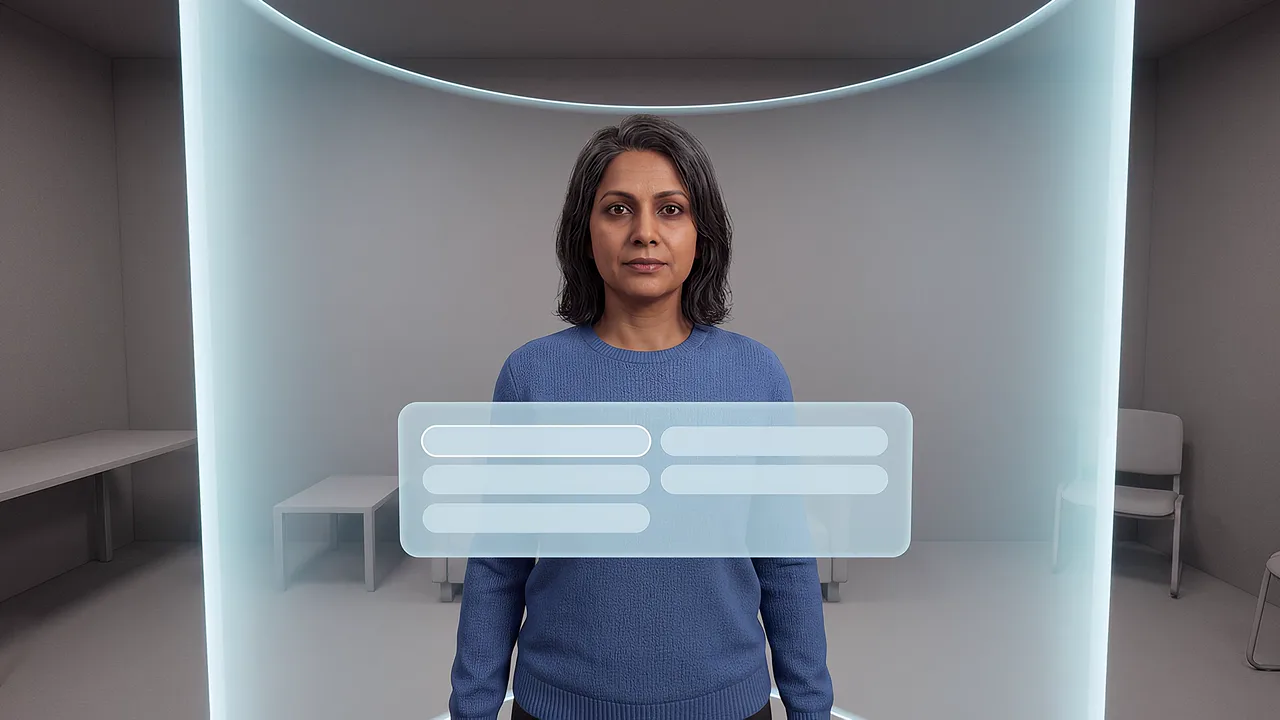
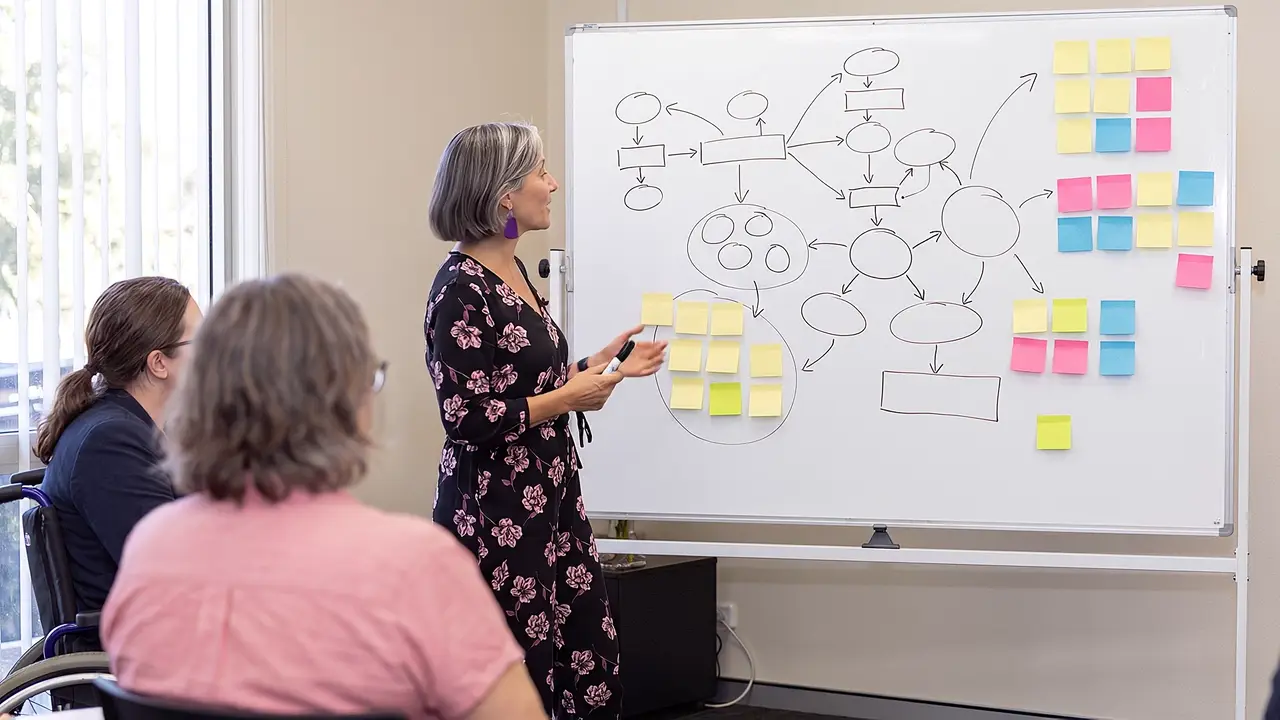
Your practitioners shape every scenario.
Every scenario is shaped in co-design workshops with your practitioners, in your language, around the situations they face.
The work runs through five stages: discovery and consultation, co-design workshops, prototyping and development, testing and deployment, then ongoing support for as long as the experience runs.
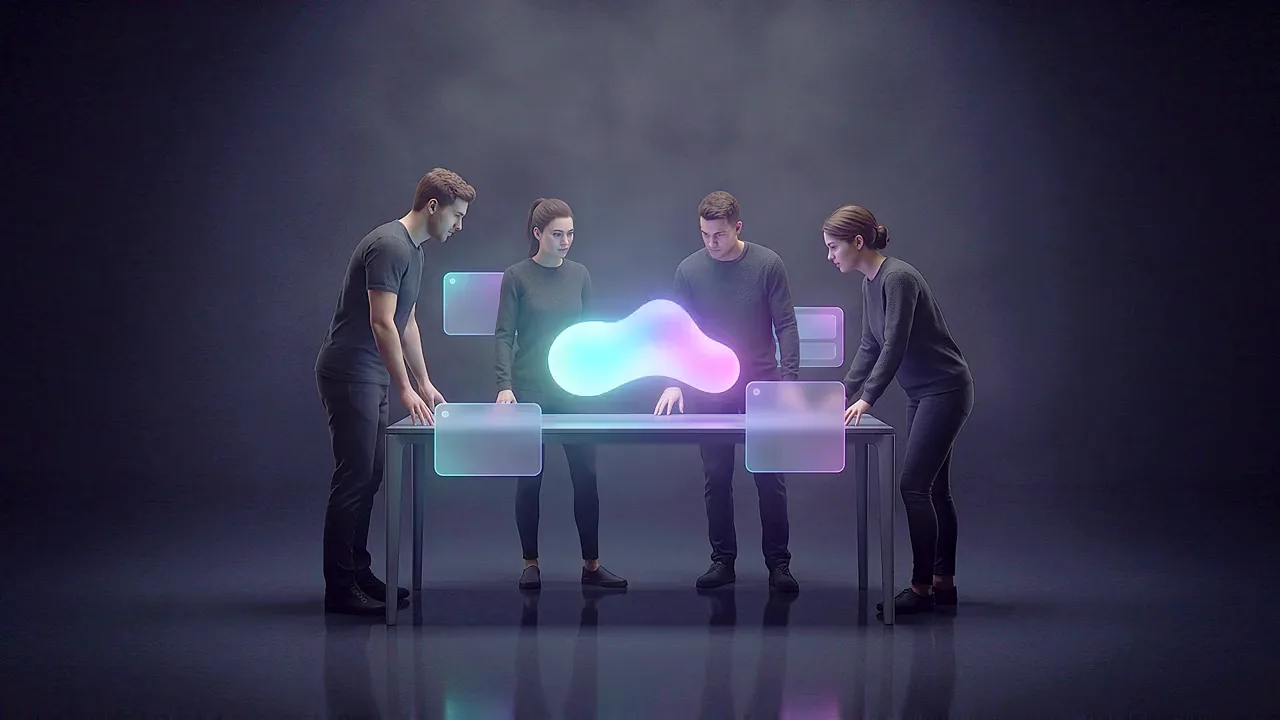
The table is the method
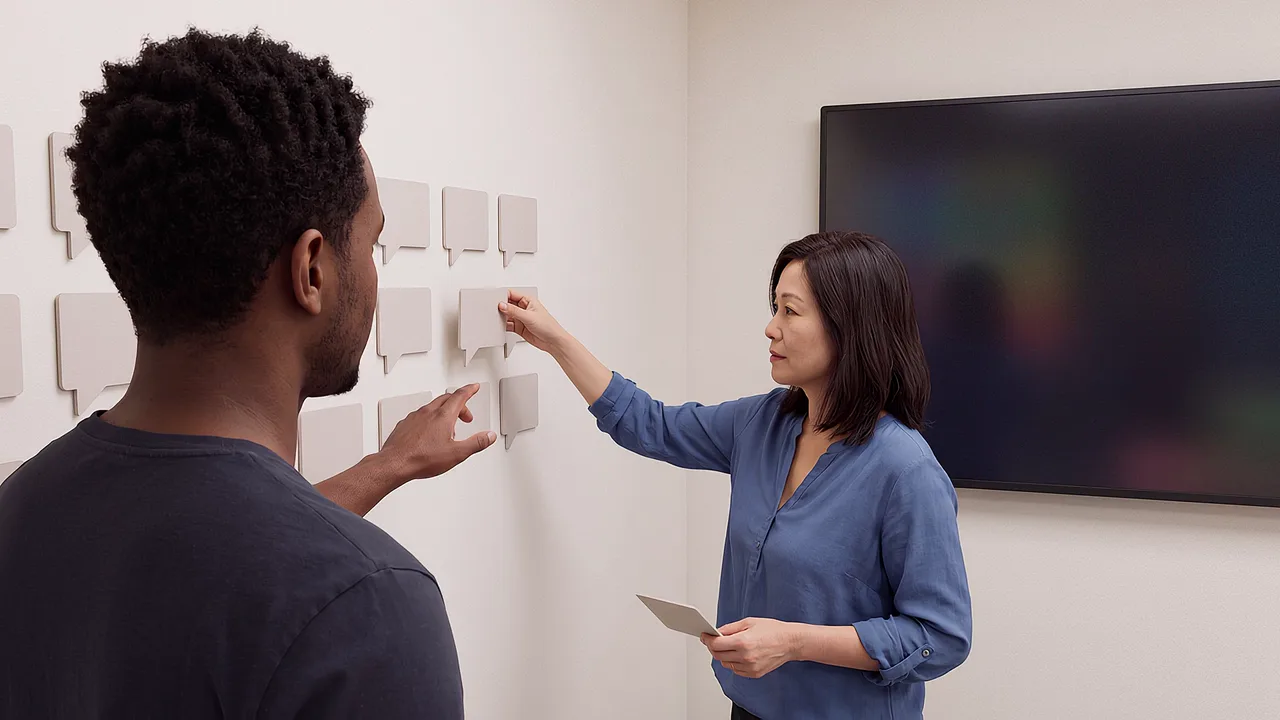
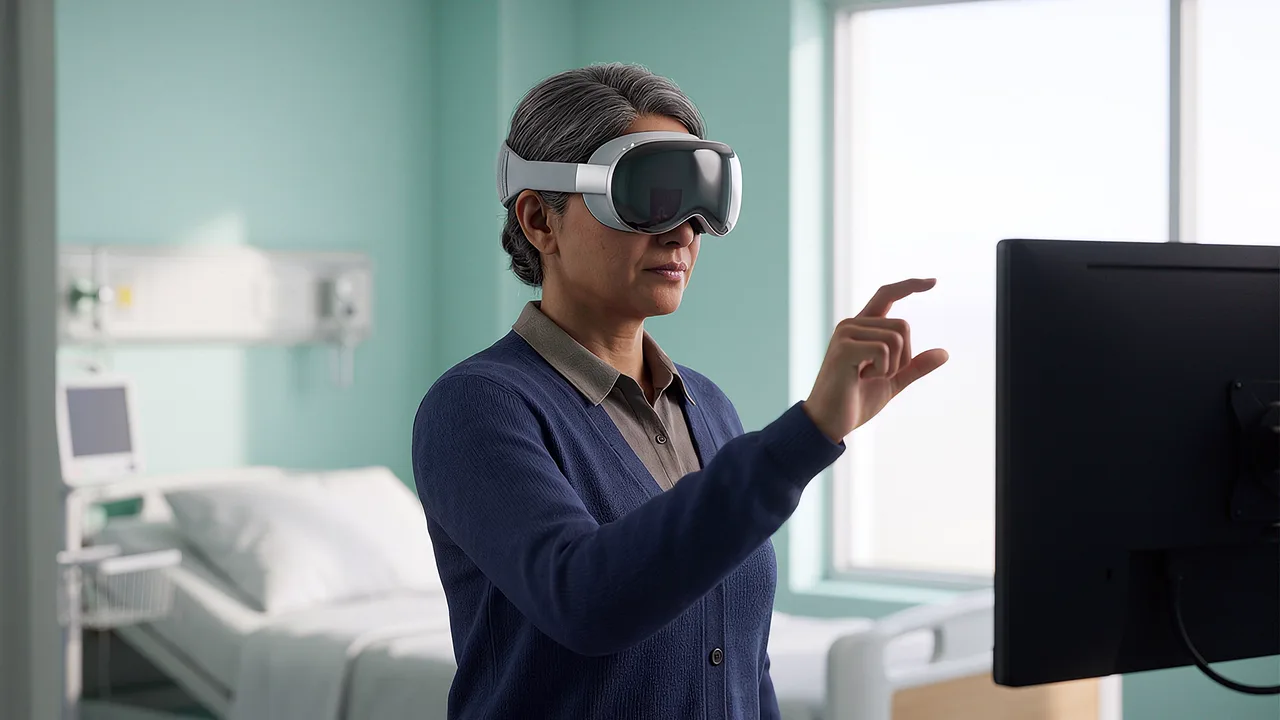
Mater runs a training program that teaches its hospital staff to have respectful conversations, and it was taught by roleplay. Mater Education wanted to test virtual reality as a delivery model, so PTR scoped the project with them.
Co-designed with Mater, modelled on its hospital environments
PTR collaborated with Mater to co-design VR scenarios for the training program Mater already ran.
Some of the scenes were modelled on parts of the hospital environments in the Mater network, for realism and familiarity.
The table comes before the build, and the room comes before the scene.
10+ YEARS
of immersive and game design work.
From The Ageing Revolution and the Equal Reality partnership to PTR today: health, education, government, resources and enterprise.
The people behind the method
Leonie Sanderson designs and leads the workshops. Simon Lowe leads the studio and the builds.
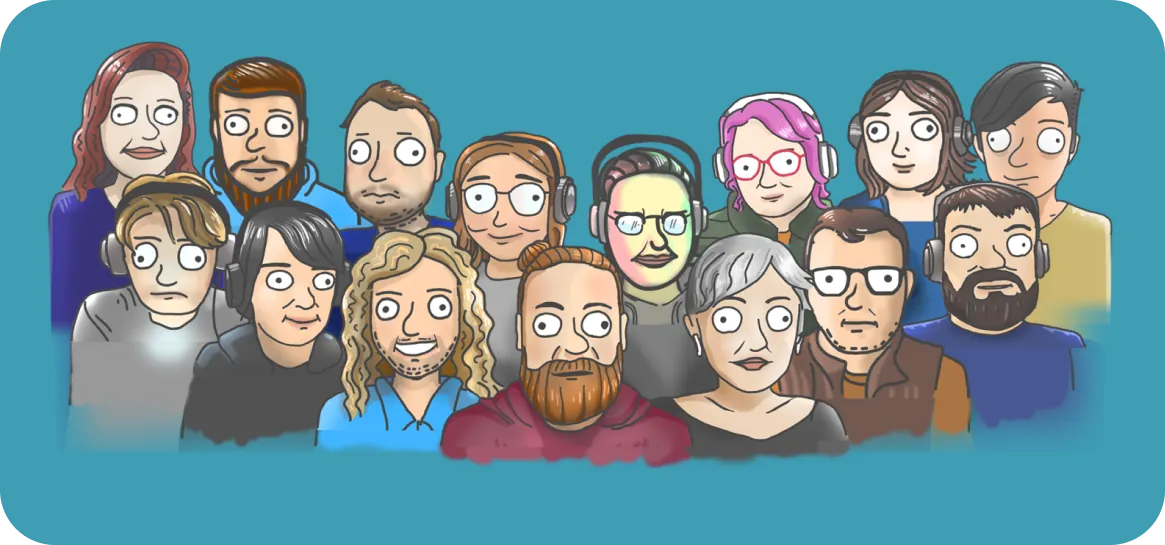
Around them is a small team grown slowly from former interns and people whose values match the work, and a network of partners for the parts that are built better together.
The work now spans artificial intelligence, augmented reality and virtual reality, custom-built for organisations across health, education, government, resources and enterprise.
Rehearsed in rooms like yours
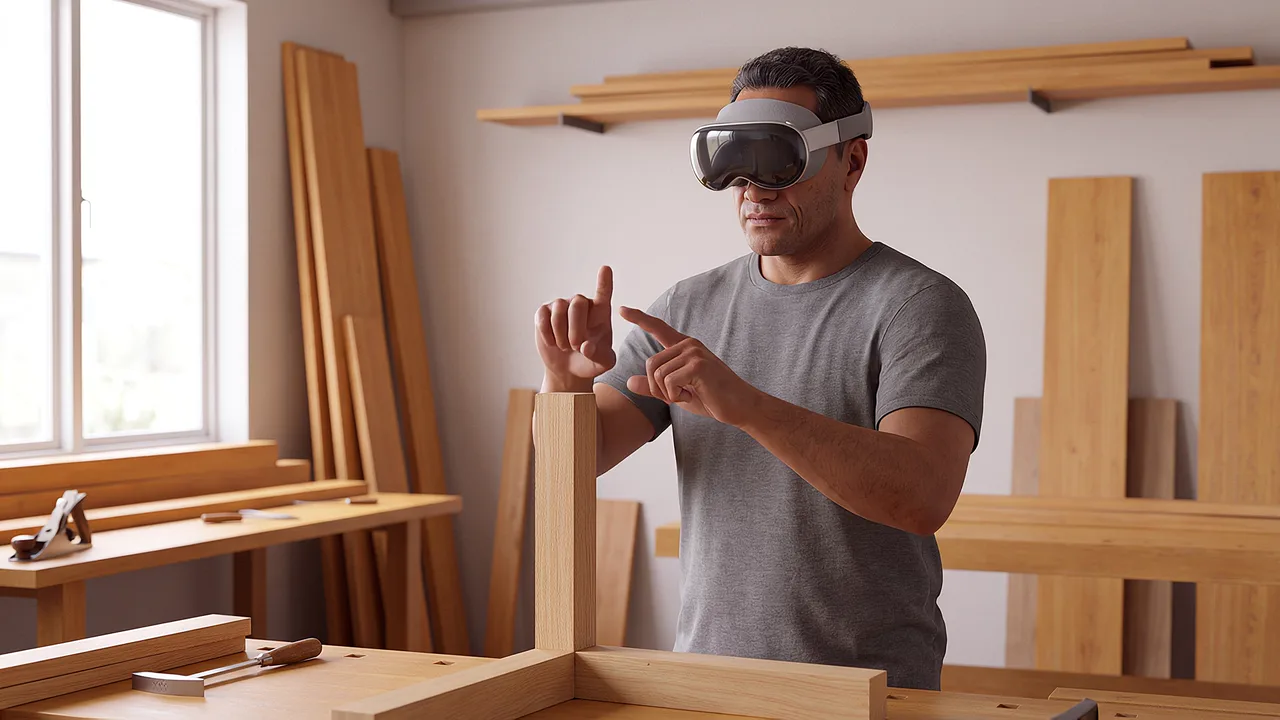
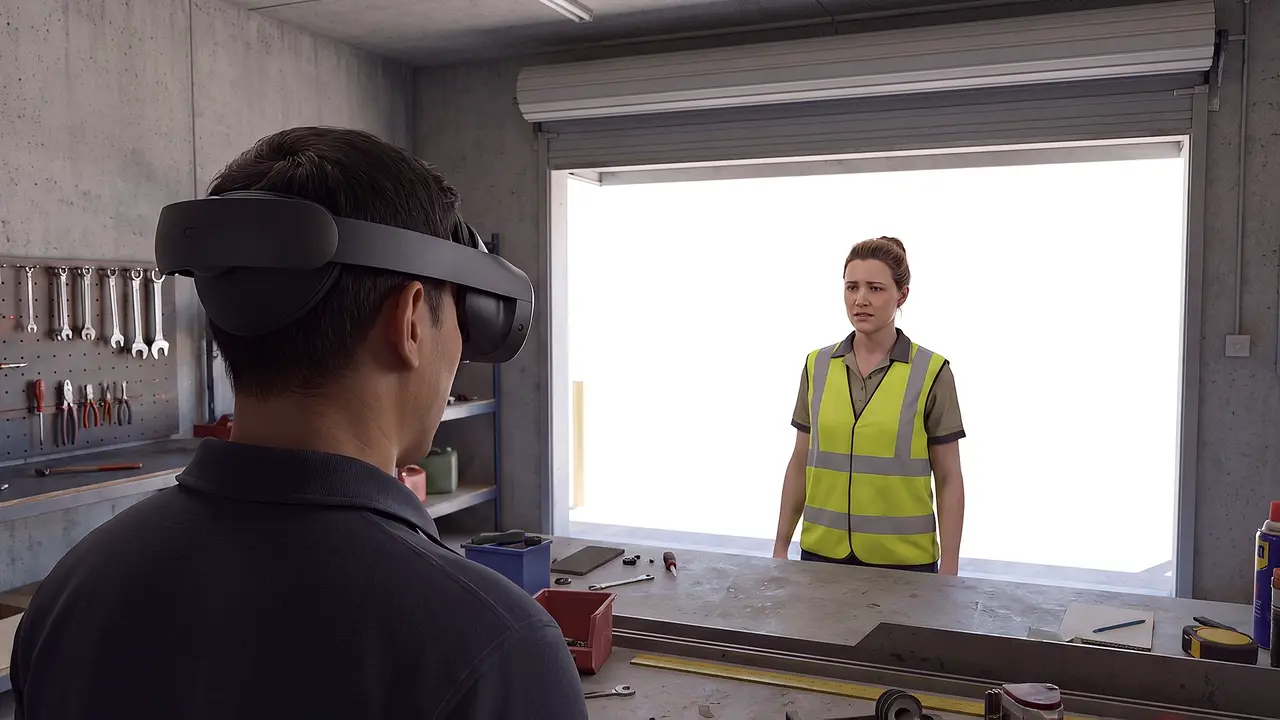
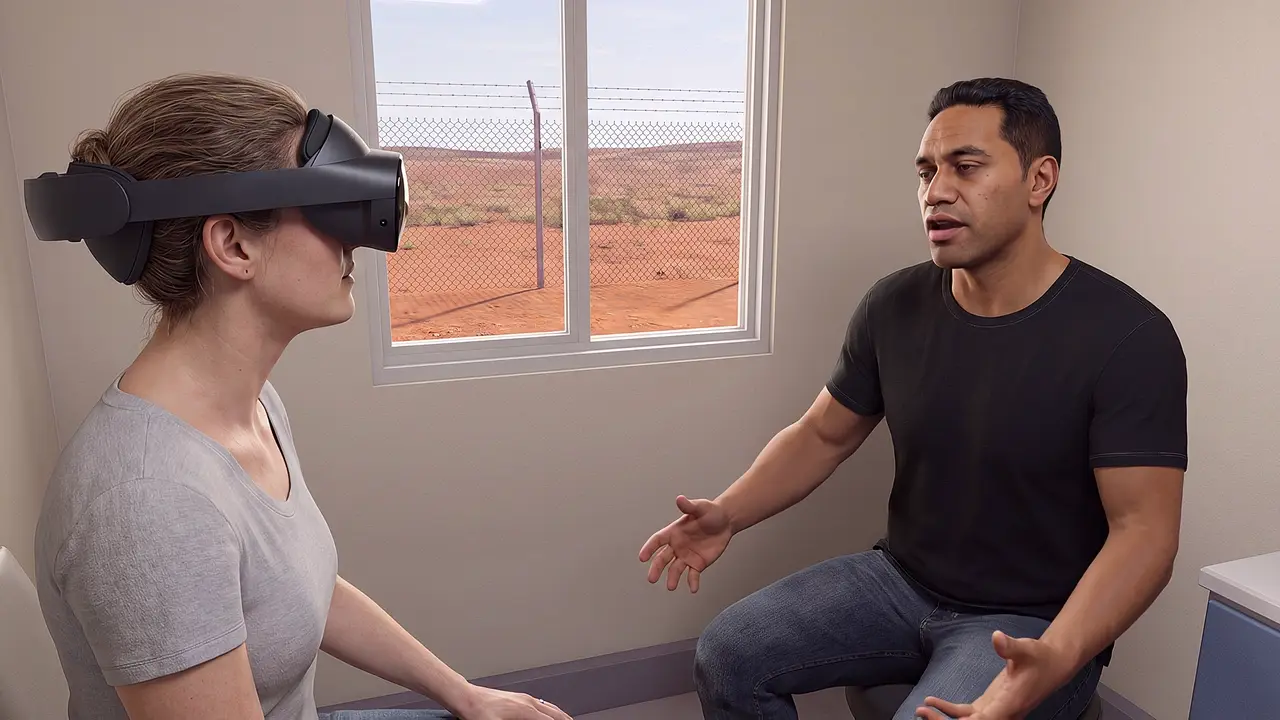
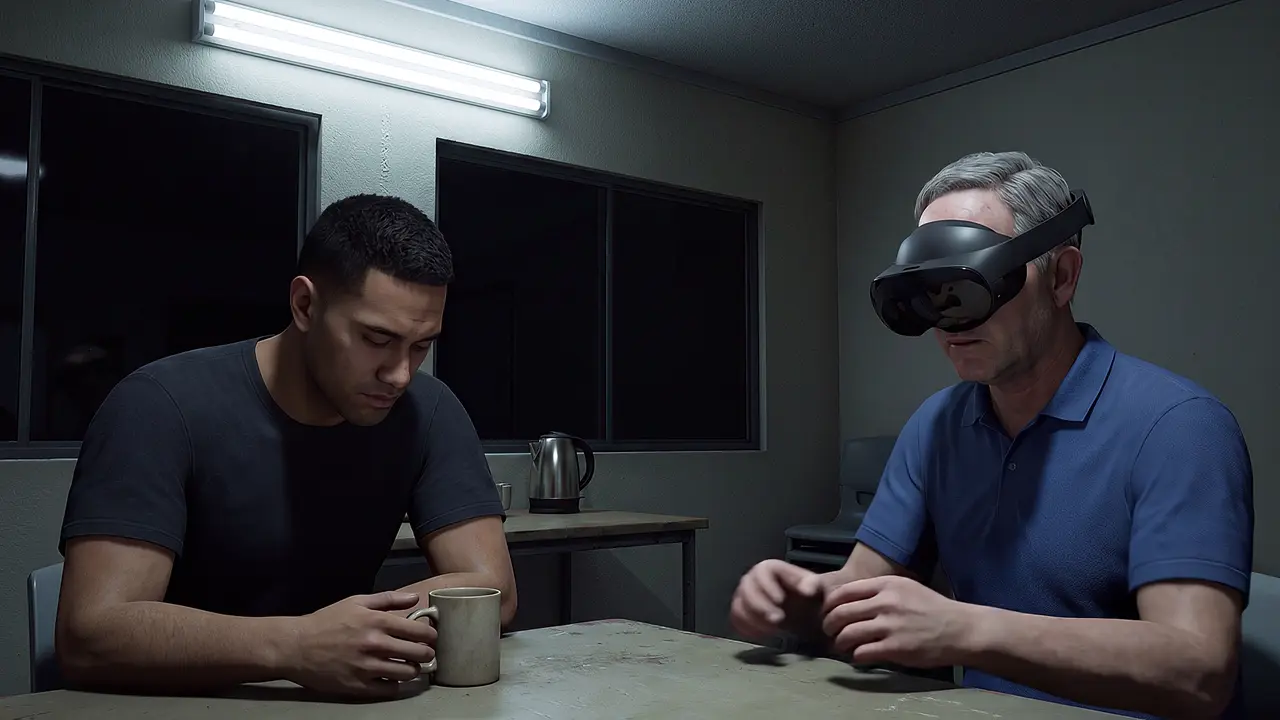
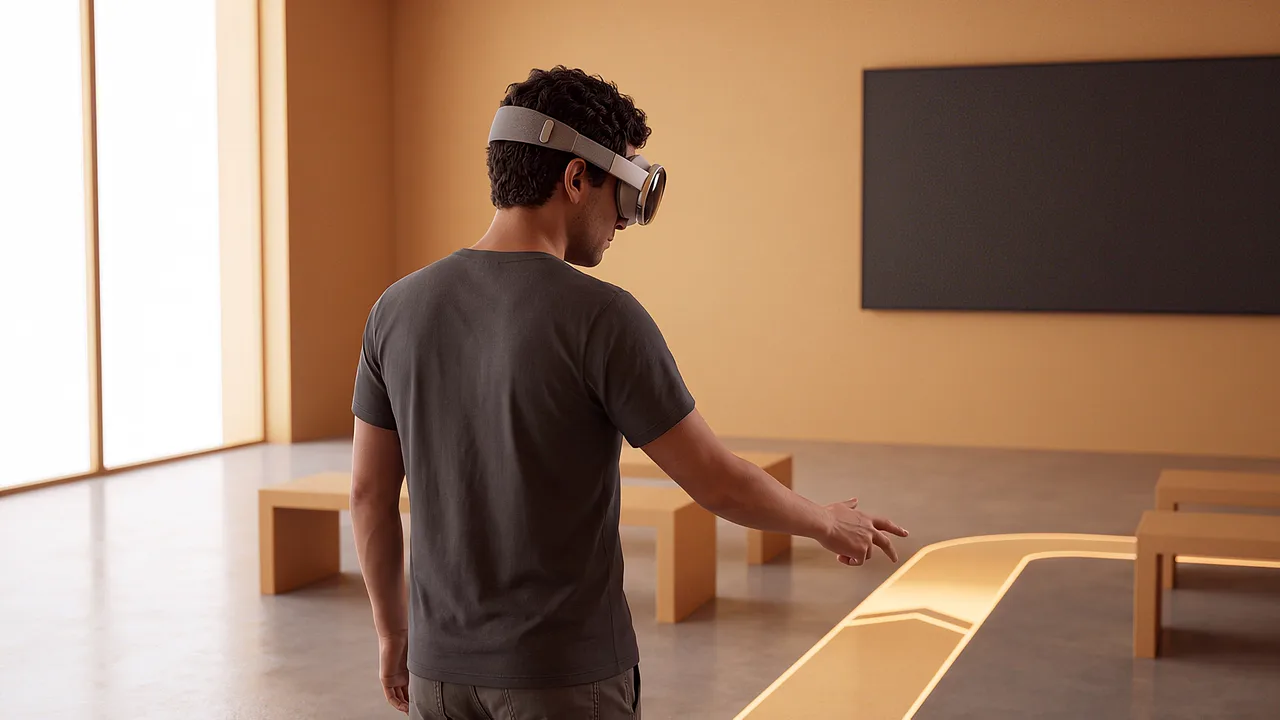
Your people do this work in a workshop shed, a remote clinic, a hospital ward and a crib room at night. Each scenario is set in a room like theirs, so what they practise is what they meet on shift.
The people who shape each scene
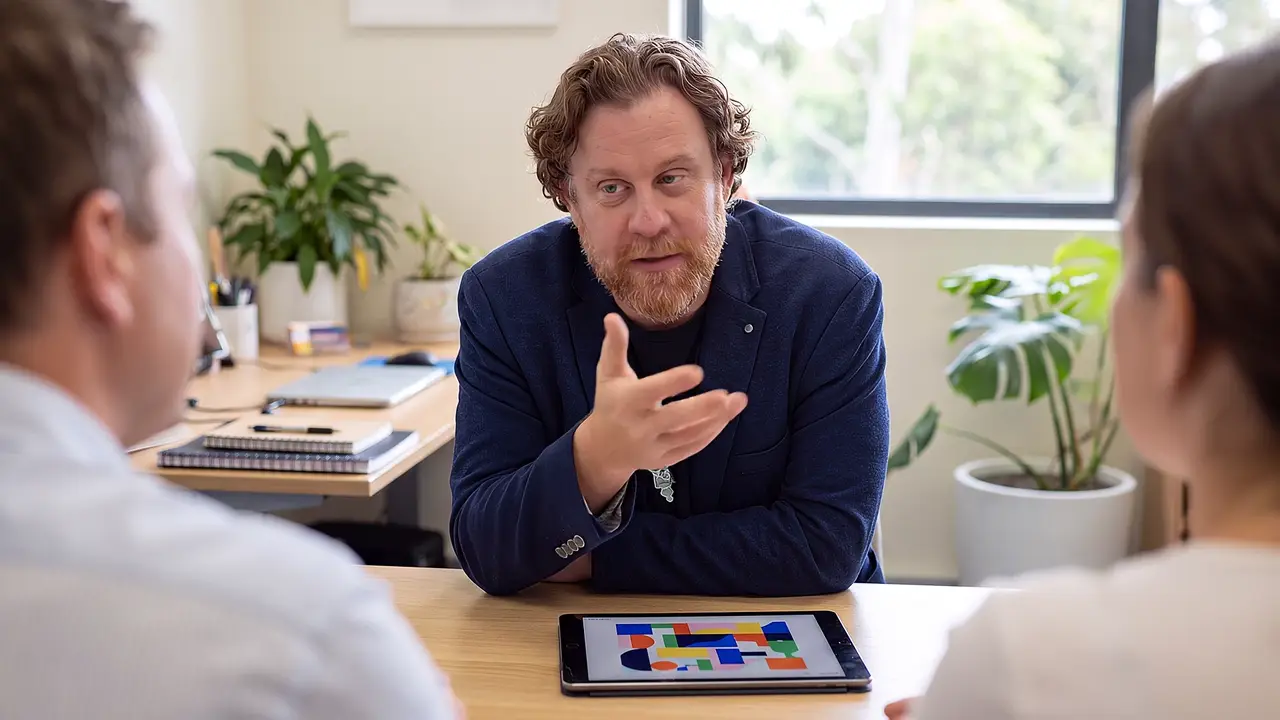
Your practitioners and the people a scenario is about sit at the first workshop. They say what the moment contains, and the scene is finished only when they say it rings true.
Lived experience at the table
The Central Coast Council program was co-designed with the Council's Access and Inclusion Reference Group, and members of that group appear in the VR itself.
It is the pattern every project follows: the people a scenario is about help write it, then test it, then sign it off.